One place to look, from prep to CRM.
Content in Highspot, context in Confluence and SharePoint, deal history in Salesforce and call recordings. Sellers felt the seams every day.
Now a rep gets the same answer at every step. So do the partners.
Engage
Your best answers are already written down somewhere. Engage puts them in front of your rep while the buyer is still on the call.
Prep before. Answers during. Follow-up after.
Content in Highspot, context in Confluence and SharePoint, deal history in Salesforce and call recordings. Sellers felt the seams every day.
Now a rep gets the same answer at every step. So do the partners.
Jeramie Parsons, VP Revenue Operations, has a rule about tools: sellers pick one. Anything that needs a second tab has already lost.
An SVP now lives in Tribble, pulling competitive analysis straight out of account plans. The same material the response team writes questionnaires from.
Twenty thousand prompts isn’t a pilot number. That’s what happens when the answer is already in the window you have open.
Respond handles the documents. Engage puts the same material in front of the people carrying the number.
Reps don’t lose deals on the proposal. They lose them in the three conversations around it.
Nobody walks in cold.
The brief lands before the call. What moved on the account, what this buyer has pushed back on before, and the questions nobody ever closed out.
It’s the prep a good rep does with two free hours. Nobody has two free hours.
The one question nobody prepped for.
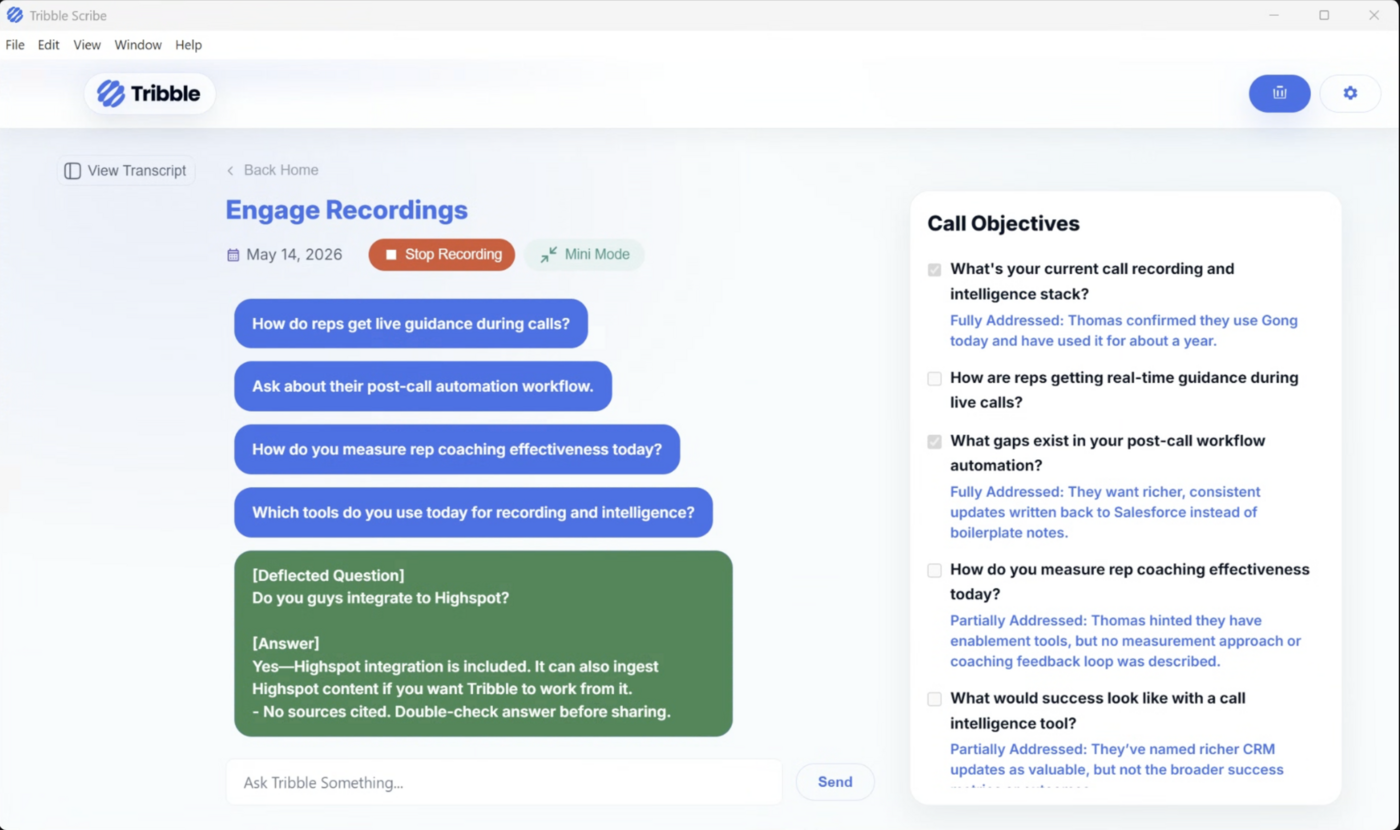
Security, data residency, the integration roadmap, a competitor’s claim — or something your own proposal team put in writing eight months ago. The approved answer comes back in the thread your rep already has open, with the document behind it.
And when there’s no approved answer, Engage says so. It won’t invent one.
CRM hygiene fails because it’s homework.
Scribe listens, so the follow-up, the action items and the CRM fields are written from what was actually said — not from what your rep can remember on Friday. They review and approve. Nothing is written without them.
And what the call taught goes back into the Brain, so the next rep asking that question gets a better answer than this one did.
01
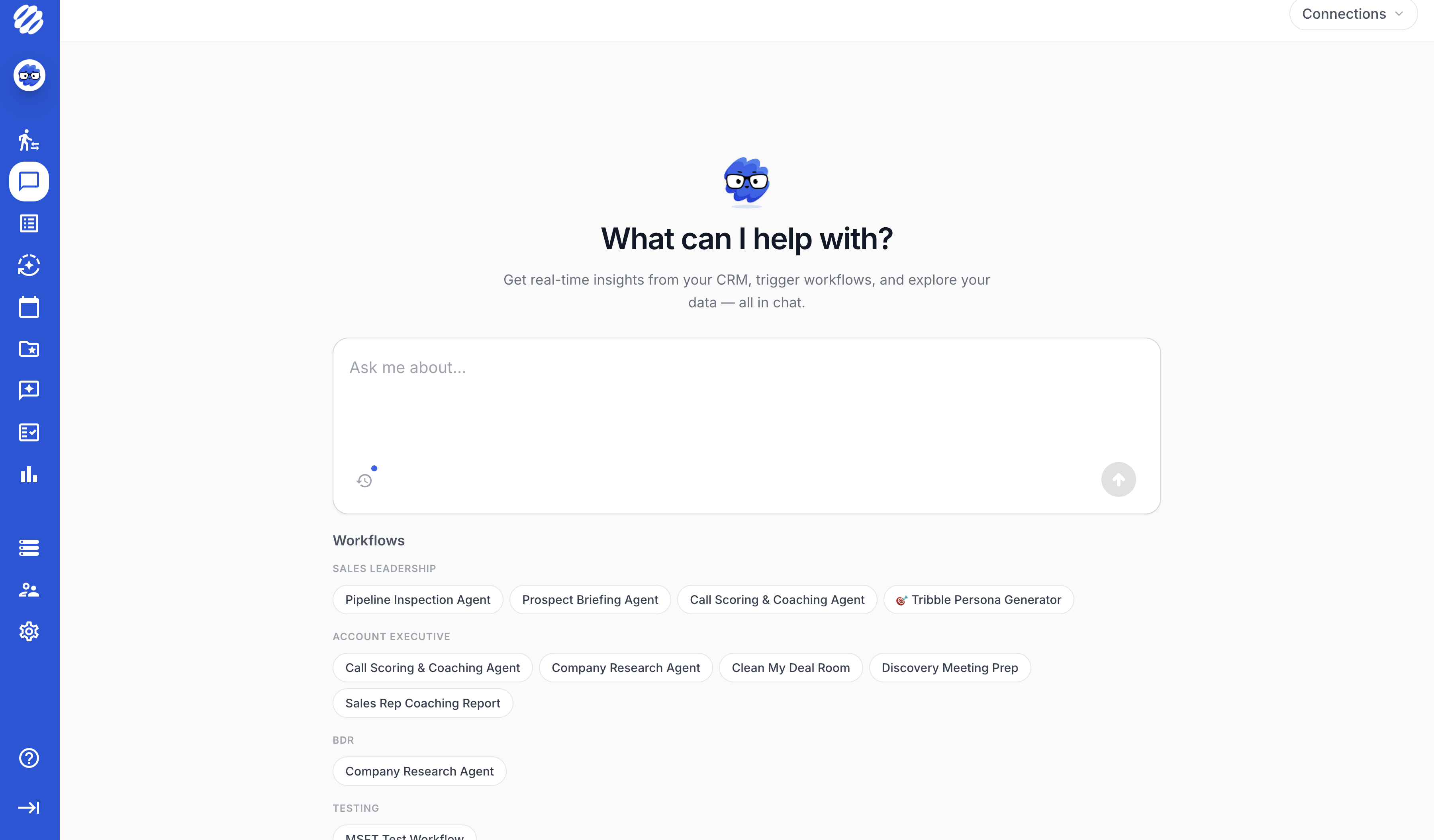
Prep, research, call scoring, deal-room cleanup. Grouped by who actually does the job.
02
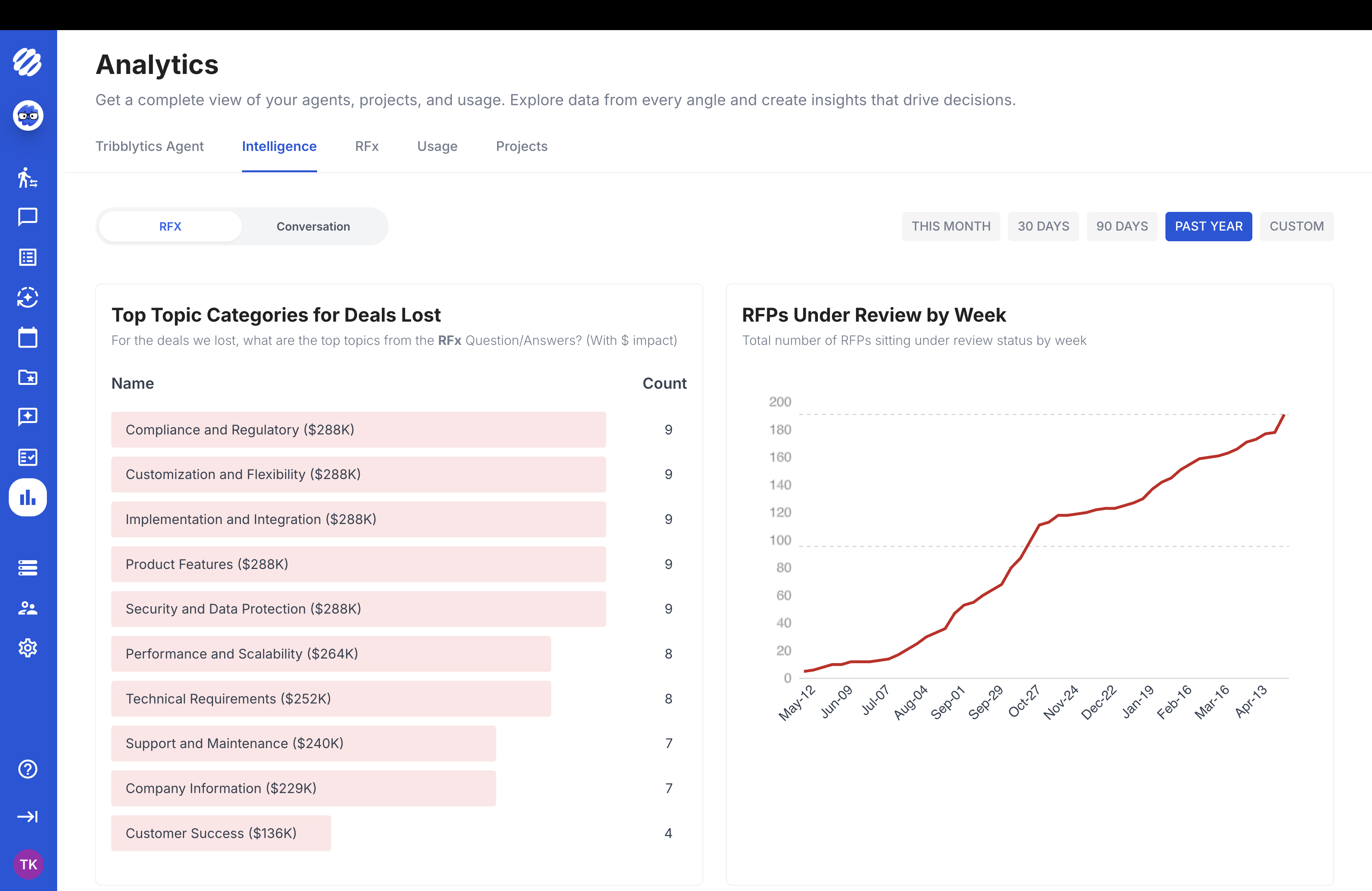
The topics that show up in deals you lost, with the dollars attached.
03
Mid-call, in the thread your rep already has open, with the document behind it named.
04
Drafted from the recording, sitting on the opportunity, waiting on one click.
Every answer comes from something your company approved, and it names the source. When there’s no approved answer, Engage says so and sends the question to whoever owns it.
Prep, live answers, follow-up. Scribe records the call so the last part writes itself. One product across all three, instead of three tools that never quite line up.
Slack, Teams, the CRM, the call. Nothing new to remember mid-conversation. Licensed per seller, so one pod can go first and the floor can follow.
Reads the deal. Writes back to it.
Your CRM, calendar, calls and documents build the brief. The follow-up and the field updates go back to the same opportunity, so nothing ends up living only in one rep’s head.





The Brain is what Engage and Respond both answer from. Every source has an owner and a review state, so the answer your rep gives on a call is the one your proposal team would defend in writing.
See the platform4.7/5






What Engage does, where Scribe fits, and how it’s licensed.
Engage is what your reps use around a buyer conversation. It briefs them before, answers the buyer during, and writes the follow-up and the CRM updates after. It runs in Slack, Teams and the CRM, so there’s nothing new to open.
No. Scribe is the call recording inside Engage. It captures the conversation so the follow-up and the CRM fields come from what was actually said. It’s part of an Engage licence, not something you buy beside it.
Conversation intelligence tells you what happened on the call. Engage helps you during it. Ask about security, pricing or a past commitment and you get the approved answer with its source, not a transcript search.
From the same approved material your proposal team defends in RFPs, DDQs and security questionnaires. If security updated an answer last week, the rep on tomorrow's call gets the updated one. That’s the whole point of one Brain under both products.
It says so. Engage won’t invent an answer to cover the gap. The question goes to whoever owns that area, and once they answer it, the next rep doesn’t have to ask.
It drafts. Your rep approves. Field updates, action items, risk signals and MEDDIC notes land as a draft on the opportunity, which is the only kind of CRM hygiene reps actually finish.
Salesforce, HubSpot, Slack, Teams, Gong, Google Drive, SharePoint, Confluence, Box and OneDrive, among others. Engage reads deal history, calendar and prior calls to build the brief, then writes back to the CRM after.
Per seller, per month, for the people in front of buyers. Respond is a team licence priced per project instead. Both include the Brain. The pricing page has the full comparison.
Yes, and most do. One pod first, the floor after. The knowledge is already in the Brain, so adding sellers later is a licence change, not another implementation.
No, but they compound. If you already run Respond, Engage has an approved library to answer from on day one. If you start with Engage, the library builds itself out of calls and deal history.
Pick three your reps answer from memory today. We’ll show you what Engage says instead, and where it got it.
Book a demo